
The printed circuit board industry has evolved into a global marketplace where engineers and procurement specialists face a fundamental choice: source from domestic or regional suppliers, or turn to Chinese manufacturers who have invested heavily in advanced production capabilities. Nowhere is this decision more consequential than with PTFE (polytetrafluoroethylene) PCBs, the high-frequency laminates that power radar systems, aerospace communications, 5G infrastructure, and medical imaging equipment. PTFE-based boards demand exceptional process control, tight impedance tolerances, and specialized handling that not every factory can deliver. Understanding how Chinese suppliers compare against their global counterparts across the criteria that matter most will help you make a confident sourcing decision.
Quality and Material Standards
Global suppliers, particularly those based in the United States, Japan, and Germany, have long dominated the high-reliability PCB market. Companies such as Rogers Corporation, Taconic, and Arlon set the benchmark for PTFE laminate quality, and their authorized fabricators follow rigorous IPC Class 3/A standards. These manufacturers typically hold AS9100 certification for aerospace and NADCAP accreditation for specialized processes. Their quality management systems are built on decades of institutional knowledge, and they maintain tight control over etchback, plasma treatment, and surface preparation steps that are critical for PTFE adhesion.
Chinese PTFE PCB manufacturers have closed much of this gap over the past decade. Top-tier facilities in Shenzhen, Guangzhou, and the Yangtze River Delta region now carry ISO 9001, IATF 16949, and UL certifications. Many have invested in automated optical inspection, impedance testing, and micro-sectioning labs that rival those of Western shops. The key difference lies not in the equipment but in the maturity of quality systems. A well-audited Chinese factory can deliver consistent Class 3A results, but the buyer must perform due diligence: request qualification samples, review process control documentation, and verify that the supplier handles PTFE-specific challenges such as dimensional stability and copper foil peel strength.
Cost and Lead Time
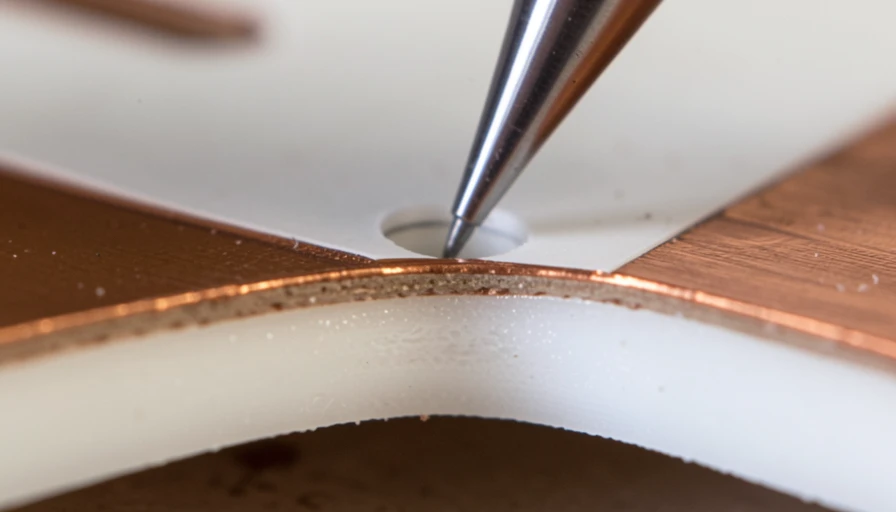
The most visible advantage of working with a Chinese supplier is cost. For a typical four-layer PTFE board with mixed dielectric construction, pricing from a Chinese manufacturer can be 30 to 50 percent lower than a comparable quote from a European or American fabricator. The savings come from lower labor costs, economies of scale in laminate procurement, and vertically integrated supply chains that reduce overhead. For high-volume production runs, these numbers become compelling.
Lead time is a more nuanced comparison. Global suppliers that hold raw material inventory can turn prototype quantities in five to seven business days, though production orders often stretch to three or four weeks. Chinese manufacturers have become remarkably fast on standard builds, with many offering 24-hour quick-turn prototypes and 10- to 15-day production cycles. However, PTFE laminates are not always stocked in every grade, and specialty materials such as Rogers 4350B or low-loss woven glass PTFE may require a procurement lead that adds days to the schedule. The buyer should confirm material availability before committing to a timeline.
Technical Capabilities and Customization
When a design demands exotic stackups, blind and buried vias, or sequential lamination, global suppliers often hold an edge in engineering support. Their application engineers understand the electrical behavior of PTFE dielectrics and can advise on stackup optimization, copper roughness effects, and thermal management. They routinely handle controlled impedance tolerances of ±5 percent and can produce boards with hybrid constructions combining PTFE with standard FR-4 in the same panel.
Chinese manufacturers have invested aggressively in advanced capabilities. Many now offer laser drilling for microvias, selective plating for mixed-finish boards, and plasma etching for reliable PTFE through-hole metallization. The difference is that engineering consultation may be less proactive. To get the same level of technical collaboration, the buyer must clearly specify requirements upfront and possibly provide Gerber files with embedded impedance stackup notes. For straightforward designs, Chinese shops can match or exceed global quality at a fraction of the price. For highly novel or complex architectures, a global partner may offer more responsive design-for-manufacturing feedback.
Supply Chain and Logistics
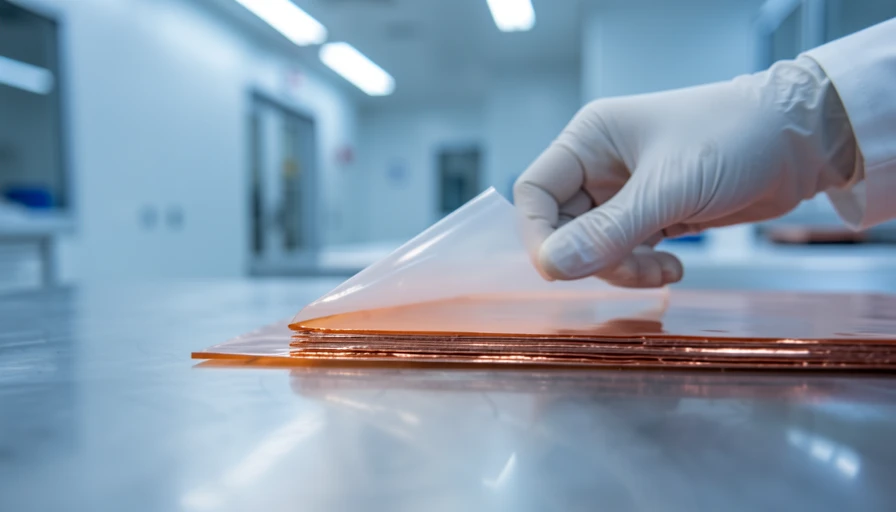
Supply chain resilience has become a decisive factor since the disruptions of the early 2020s. Global suppliers offer proximity to Western customers, which means shorter shipping routes, fewer customs complications, and easier communication across similar time zones. For defense or medical programs where supply chain traceability is contractual, a domestic or regional supplier may be the only compliant option.
Chinese suppliers, on the other hand, have built sophisticated logistics networks. Air freight from Shenzhen to Los Angeles or Frankfurt can deliver finished boards in three to five days. Many factories maintain bonded warehouses or regional distribution hubs to reduce transit risk. The real challenge is communication: language barriers and time zone differences can slow problem resolution. A buyer who establishes a dedicated account manager and sets clear escalation protocols can mitigate these issues. The cost savings often justify the extra coordination effort, especially for commercial and industrial applications where speed-to-market matters more than geographic origin.
Which Supplier Is Right for Your Project
The decision between a Chinese and a global PTFE PCB supplier depends on your project's risk profile, volume, and technical complexity. If you are prototyping a cutting-edge aerospace design with tight military specifications and need embedded engineering support, a qualified global fabricator is the safer choice. If you are launching a commercial 5G antenna array or a high-frequency test fixture and your team has solid PCB design experience, a Chinese supplier can deliver comparable quality at dramatically lower cost.
Regardless of which path you choose, the single most important step is to audit the factory. Ask for impedance test reports, solderability samples, and references from customers who run similar PTFE designs. Whether you select a global specialist or a Chinese manufacturer, the right partner will be transparent about their process capabilities and willing to qualify their work. For buyers exploring the Chinese market, working with a reliable ptfe pcb manufacturer that has demonstrated experience with high-frequency laminates can shorten the learning curve and reduce qualification risk.
The global PCB industry is not a zero-sum game. Many companies now dual-source PTFE boards, using Chinese manufacturers for production volume and global suppliers for prototype validation or mission-critical programs. By understanding the strengths and limitations of each option, you can build a sourcing strategy that balances cost, quality, and lead time for every project on your roadmap.