Understanding Invar 36 and Its Machining Challenges
Invar 36 is a nickel-iron alloy containing approximately 36% nickel, known for its exceptionally low coefficient of thermal expansion. This property makes it ideal for applications that require dimensional stability under temperature fluctuations, such as optical mounts, laser components, precision measurement devices, and aerospace structures. However, machining Invar 36 presents significant challenges due to its tendency to work-harden. Work-hardening, or strain hardening, occurs when mechanical deformation causes dislocations in the material’s crystal structure, increasing its hardness and brittleness. This can lead to rapid tool wear, poor surface finish, and even part rejection. The material’s gummy nature during cutting requires specific strategies to avoid creating a hardened surface layer that ruins the workpiece. For precision manufacturers like XTJ CNC, with over 20 years of experience and ISO 9001 certification, addressing work-hardening is critical to delivering high-quality parts that meet tight tolerances. The cost of rework and scrap makes getting the process right the first time a top priority.
- Phone
- +1 218 527 7419
The Science Behind Work-Hardening in Invar 36
The work-hardening behavior of Invar 36 is primarily driven by its high nickel content, which promotes dynamic strain aging. During machining, the cutting tool deforms the surface layer, creating a hardened zone that resists further cutting. This increases cutting forces, generates excessive heat, and reduces tool life. The hardened layer can also lead to surface defects and microcracks, compromising part integrity. Understanding these metallurgical mechanisms is key to developing effective strategies. By controlling variables such as feed rate, spindle speed, depth of cut, and coolant application, machinists can minimize work-hardening. The global demand for precision CNC machining continues to grow, as highlighted in a recent market analysis on invar machining, which underscores the importance of specialized expertise in this field. Selecting the correct tool geometry and coating is just as critical as the machine parameters. A sharp, positive rake tool can shear the material cleanly, reducing the deformation that leads to hardening.
“Work-hardening in Invar 36 can be effectively managed with optimized cutting parameters and advanced tooling.”
Proven Techniques for Work-Hardening-Free Machining
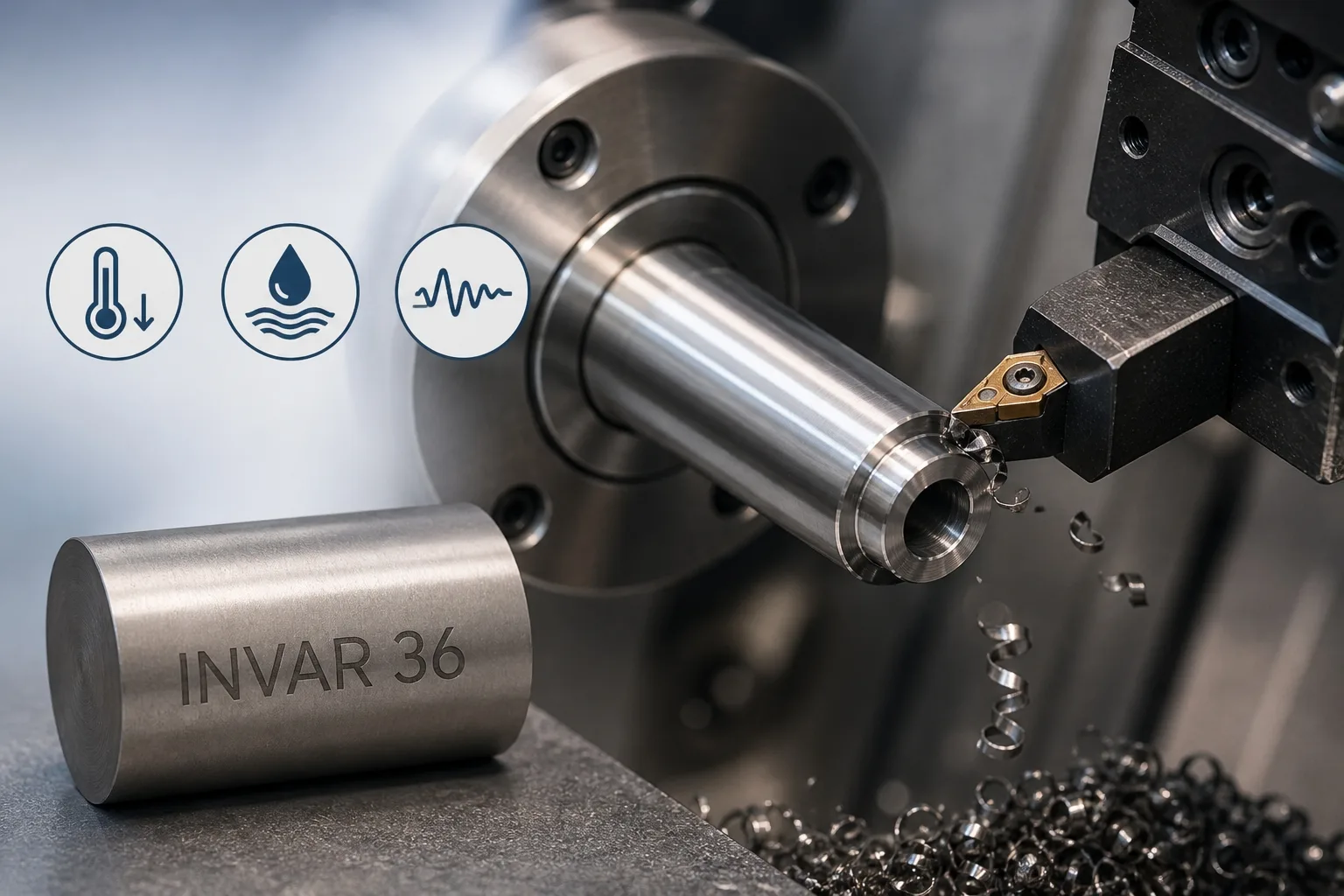
To machine Invar 36 without work-hardening issues, several proven techniques should be employed. Tool selection is paramount: use sharp, coated carbide or diamond tools with optimized geometry to reduce friction and heat. Cutting parameters must be carefully controlled: low feed rates (0.002-0.005 in/rev) and moderate spindle speeds (200-400 SFM) are recommended to minimize strain. High-pressure coolant systems are essential for heat dissipation and chip evacuation. Additionally, climb milling can reduce cutting forces and minimize work-hardening. Advanced CNC machines with 5-axis capabilities allow for more efficient toolpaths and reduced cycle times. For further guidance, consult CNC Machining Best Practices from industry authorities. These techniques are standard at XTJ CNC. The company brings over 20 years of ISO 9001-certified experience in precision milling, turning, and rapid prototyping, achieving tolerances down to ±0.003mm. This level of precision is essential for Invar 36 components used in critical applications.
Why Choose an Expert CNC Machining Partner
Partnering with a seasoned CNC machining service is crucial for challenging materials like Invar 36. XTJ CNC, founded in 2005, brings over 20 years of ISO 9001-certified experience to every project. The company specializes in precision milling, turning, and rapid prototyping for both metal and plastic components, consistently holding tolerances down to ±0.003mm. This proven expertise ensures that even difficult materials like Invar 36 are machined without work-hardening issues, delivering parts that meet exact specifications. When tolerances are measured in microns and material costs are high, relying on a partner with a deep understanding of metallurgy and machining science is not just an advantage—it is a necessity. The right partner brings the process knowledge and quality systems required to succeed with demanding alloys.
Quality Assurance in Invar Machining
Machining Invar 36 to tight tolerances requires rigorous quality assurance throughout the process. In-process inspection ensures that work-hardening is detected early, preventing costly rework. Dimensional verification using precision measurement tools confirms that parts meet the required specifications. For manufacturers serving demanding industries like aerospace and optics, a robust quality management system is non-negotiable. XTJ CNC’s ISO 9001 certification reflects a commitment to consistent, high-quality output. This systematic approach to quality, combined with deep material knowledge, is what allows expert machinists to successfully produce complex Invar 36 components without the common pitfalls of work-hardening.